7857 stories
·
34 followers

Spare me Labour’s summer of sex // Vibrators can’t teach consent

1 Comment
  • Political Advocacy: Labour MP Samantha Niblett has launched a campaign titled “Yes Sex Please, we are British,” which aims to promote sex education, the use of sex toys, and open discussions about sexual health within government.
  • Collaboration: The initiative includes a partnership with entrepreneur Cindy Gallop, founder of the platform MakeLoveNotPorn, to replace perceived industry stereotypes with videos featuring presumably authentic sexual encounters.
  • Critical Reception: Opposing politicians and commentators have characterized the focus on this campaign as a frivolous distraction from pressing national crises and systemic government failures.
  • Philosophical Limitations: The campaign relies on a non-judgmental framework that conflates personal preference with objective moral values, failing to offer substantial guidance on the ethics of interpersonal relationships.
  • Methodological Flaws: By reducing complex relationship dynamics to basic platitudes about consent and communication, the initiative avoids the necessity of making moral judgments regarding behaviors that may be inherently dehumanizing.
  • Proposed Solutions: The suggested approach fails to address the underlying cultural erosion of moral standards, instead repackaging existing behaviors under the guise of an enlightened “sex education” curriculum.

Early exposure to pornography can affect people strangely. In an interview this week in Politics Home, Labour MP Samantha Niblett recalled the first time she clapped eyes on the stuff. “I was 10… And I sometimes wonder, having seen it so young… whether that has shaped the person that I am today.” Reading about her newly launched sex education campaign for the nation — promoting masturbation for health improvement, bringing sex toys into parliament, encouraging fellow MPs to talk openly about orgasms  — I’ll admit, I started to wonder about that too.

Niblett’s big idea is to herald in what she calls a “summer of sex”, instructing the general public in the art of having satisfying, mutually respectful erotic experiences. Perhaps assuming that the Right needs more help with this than the Left, she appears to be spinning her campaign towards Reform and Restore voters in particular: “it’s about taking control of our patriotism, about taking control of our Britishness, and not feeling ashamed”. Accordingly, she has named the project “Yes Sex Please, we are British”, which ironically sounds like something only a foreigner could have made up. In fact, though, it’s a riff on a Seventies sex farce featuring Ronnie Corbett — probably a little niche, even for Rupert Lowe fans.

The details of Niblett’s project sound unlikely to get the national pulse racing. Or as Aristotle percipiently noted in a different context, one swallow does not a summer make. She plans to team up with a fellow sex positivist — the equally improbably named Cindy Gallop — to replace the pornographic stereotypes in people’s heads with images of “real people” having sexual contact. In other words: don’t picture the slick thrustings of Pornhub, think Matt Hancock smooching in an office. Gallop is the founder of MakeLoveNotPorn (MLNP), a website where, according to its own hype, you can “watch real world sex videos in all their loving, hot, and messy humanness”. Niblett apparently enjoys visiting the site herself — “It’s a turn on, it helps you masturbate, helps you cum”, she elaborates to the reporter, somewhat unnecessarily — and says she is looking to facilitate engagement between its founder and government ministers.

Gallop, meanwhile, is a 66-year-old entrepreneur who recently told the Telegraph she is proud of the fact that she “regularly and recreationally” sleeps with younger men. It was apparently in the course of these amatory adventures that she had a Eureka moment, in the traditional sense. She started to notice that the young men with whom she was sleeping had various misconceptions about sex, based on hardcore porn consumption. And lo, the idea for MLNP was born.

In a spirit of inquiry, I signed up for the free version. I can’t say I enjoyed the experience much, though perhaps it was because the clips I was watching were only three seconds long — you have to pay to watch full videos, and I didn’t. Generally, the site looks like an updated Readers’ Wives section. If you like brutally natural lighting, concentrated facial expressions, low-energy writhing on well-worn Ikea furniture, and occasional grunts interspersed with the sounds of the Heathrow flightpath, this might well be the place for you.

Participants write their own blurbs to lure viewers in, and several seem to involve references to childcare: “This is just a short video we made while finding some time in the morning while the children were still asleep”; “We’re again using the time our toddler is napping to get as much of each other as possible”. Another theme is the outdoors: “Witness as Tausha’s body responds to Trevor’s touches. Hear her moans echo through the forest, listen to the birds respond to her primal tones”. I did as instructed and think I might have heard a startled woodpecker, though it was quite hard to tell.

Of course — as Niblett’s fellow MPs have been quick to point out — this is all a right Carry On, and a distraction from current political priorities: wars, looming food shortages, systemic state failures resulting in the murder of children. As Kemi Badenoch pithily put it in the Commons, “it gives a whole new meaning to fiddling while Rome burns”. Stung by the criticism, Niblett has apparently now changed her PR strategy, suggesting yesterday that the campaign is for the benefit of “old people” who “want to have sex”. Presumably Badenoch’s Spads are brainstorming double entendres about the triple lock as I write.

But what is also frustrating is that Niblett and Gallop identify a real problem, though the solution they propose is hilariously empty. It is obvious that porn use, among other modern malaises, is infecting sexual behavior to the detriment of both women and men, but the solution cannot be yet more porn — for this is indeed what MLNP provides, despite the disclaimer in its title. True, there are no webcams or teary-eyed women retching, an undoubted plus; but the mere absence of something awful scarcely counts as a valuable education.

“There are no webcams or teary-eyed women retching, an undoubted plus; but the mere absence of something awful scarcely counts as a valuable education.”

Part of the problem is that images of people enjoying one another say nothing very complicated. Not being made of words, images tend to be simple like that. Gallop grandiosely claims that each of the videos on her site “is an object lesson in consent, communication, good sexual values, good sexual behavior”. But that’s like saying that a photo of Kew Gardens is an object lesson in how to grow roses. In fact, though, what we are supposedly seeing demonstrated onscreen at MLNP — respect, mutuality, loving concern for the other, or whatever — is the end result of a process that is still a complete mystery to many.

Since the sex you have with others is a product of the wider relationship you have with them, a sex education worth its name would require making substantive moral judgments about good and bad relationships — and not just in the bedroom or on the picnic rug. Yet beyond the usual platitudes about consent and better communication, this is something both Niblett and Gallop are very unwilling to do; and it’s a reluctance shared with nearly everyone in the so-called “sex education” space. Niblett insists in her interview that she is not “saying that anybody else’s preferences are wrong”. And in a 2009 Ted talk, Gallop states: “this is absolutely not about judgment… this is not about good and bad”. She even professes herself a regular watcher of hardcore porn. Her big revelation is that for every possible sexual proclivity, there will be some that like it, and some that don’t; and if you don’t like something, it is OK to say so.

But secondary schools, women’s magazines, and soap operas have been harping on this basic point since at least the Eighties. Announcing it yet again is not going to change a thing. In fact, the average person who assents to a hated sexual practice knows perfectly well that a firm “no” is always available; but they don’t want to use it, and not necessarily because they are feeling open-minded. A rival explanation is that they can’t think of any persuasive consideration against the practice in question; and, in this regard, mainstream culture has done nothing to help. On the contrary, it has made nearly every kind of sexual behavior immune to serious critique, as long as accompanied by the transformational fairy dust of adult consent.

Saying that something is only bad if you don’t like it, but fine if you do, is a particularly unconvincing argument. It doesn’t even work well for wine tastings, let alone human relationships. It makes your likes or dislikes of certain things seem like they must be built on sand, and scarcely worth defending. Feelings of disgust become “preferences” rather than helpful reactions of ethical discernment. You lose the capacity to articulate what in other circumstances would be a perfectly natural thing to say: “No, I’m not bloody well doing that, because it expresses nothing but contempt for me; and you are a creep for even trying”.

A real sex education must be, partly, a moral education, and moral education involves judgment by definition; yet modern moralists have a kink for being non-judgmental, as their preferred phrasing goes. Accordingly, they treat sexual activity as utterly unlike any other sphere of human behavior: as bizarrely insulated from everyday attitudes like hatred and resentment, even when the actions undertaken are obviously hateful and resentful. In no other context could you slap someone hard in the face, choke them, pull them around on a lead, or intentionally cause them to retch, yet still claim later without embarrassment that you “respected” them hugely throughout.

Since only radical feminists and religious types seem willing to contest this absurd narrative, vacuous platitudes from the likes of Niblett and Gallop about “better communication”, “freeing people from shame” and, of course, “increasing consent” will likely continue unabated, circling vaguely around the real ethical dilemmas of sexual interaction but never actually engaging. In a 2019 interview, Gallop talked of plans to start a business called ConSensual: not, as you may have first feared, a sex education site aimed at Conservative Party members, but rather a “safe social sexting app, which both enables you to sext completely securely and improves your sexual communication in your relationship (I have this all planned out in the pipeline, I just need investors)”. Imagine a Cindy-avatar in kinky boots, cheerfully reminding you that if someone calls you a filthy, disgusting whore, that’s perfectly fine, as long as you happen to like it; but absolutely not if you don’t! Personally, though, I think I’ll just stick to WhatsApp, plus my usual practice of avoiding sexting people who clearly loathe me. And that’s a bit of sex education the world can have for free.


Kathleen Stock is contributing editor at UnHerd.
Docstockk

Read the whole story
cherjr
3 hours ago
reply
уморительно
48.840867,2.324885
Share this story
Delete

Why young women hate men // The femosphere has hardened their hearts

1 Comment
  • Gender Cynicism: Polling indicates that young women are significantly more likely than young men to hold negative views of the opposite sex, trending toward a pervasive belief that all men are inherently harmful.
  • The "Femosphere": A digital culture has emerged that promotes total romantic resignation or, alternatively, encourages women to exploit men for personal gain as a protective measure against perceived inevitable betrayal.
  • Ideological Parallels: The current trend of viewing men as a monolithic enemy mirrors the "incel" phenomenon, with both groups utilizing simplistic and dehumanizing caricatures to explain away personal unhappiness or romantic failure.
  • Cultural Influences: The rise of this outlook is attributed to a combination of social media consumption, the prevalence of internet pornography, and a climate that encourages the constant surveillance of potential romantic partners for flaws.
  • Stifled Romantic Life: The adoption of these nihilistic philosophies restricts individual agency and forecloses on the possibility of meaningful, life-giving romantic connections through self-imposed isolation and extreme skepticism.
  • Intellectual Dishonesty: The ideology of the "female blackpill" relies on a false premise that denies the existence of positive, varied human experiences, ultimately serving as a defensive mechanism to avoid the inherent vulnerabilities of love.

Some weeks ago, at the bitter end of a midweek drink, a friend and I found ourselves trying to talk a 24-year-old down from the edge. What seemed at first to be common-or-garden romantic gloom became, over half an hour on that dive-bar banquette, despondent fury: the problem was, she told us, that she just hated men. All of them without exception were inherently bad; anyone with a boyfriend was setting herself up for the moment his true, rotten form was revealed — maybe in a week, maybe in 40 years; either way, he would find a means to destroy her. Happy heterosexuality was a myth to trick us out of sex and time, and we were suckers for believing it. 

The diatribe dragged wearily on: she’d never want a son — what the hell would she do with it? — and she couldn’t wait to be a “chic divorcée”, quite an ambition for a woman with only a single long-term boyfriend under her belt. Every man she met promised harm, risk and psychic poison; every guy in a bar or on Hinge was bound to ghost her, or cheat on her, or tell his friends she had fat thighs. Men only wanted big-titted bimbos; those women in turn were shallow patsies who lacked the rich inner lives of, say, herself. I reeled off our male mutual friends: “Is he evil?” I asked of the softly spoken journalist devoted to his fiancée whose worst known habit was being too generous with trays of shots. Her reply: “Not yet.”

This was not my first such evening, nor were this woman’s views especially radical in my milieus in New York or London. I was not surprised, then, by the depressing revelations in the New Statesman’s gripping cover story on “Angry Young Women” last week. The article drew on polling of 2,000 Britons between 18 and 30, finding that three times more women than men held a negative view of the opposite sex (21% versus 7%). They were more pessimistic about their futures, more likely to feel that the odds were stacked against them. Soi-disant feminists interviewed at university clubs would gloat that they “don’t care for” men, nor would they date, or be friends with, one they disagreed with politically. 

To older or less online readers, all this must seem shocking. The suspicion, the detachment, the hopelessness; it’s not how most men or women recall the ups and downs of dating. Yet the landscape has changed: these women were teens when the first volleys of #MeToo were sounding across social media; their early romantic experiences were mediated by dating apps; their partners’ sexual appetites were honed by the ubiquity of hardcore porn. To cope, the feminine cyberspace has warped into something dark and cynical. In incel culture, total romantic resignation is known as “the blackpill”: while the so-called manosphere preaches the inevitability of rejection based on looks or status, its incipient female version — the femosphere — slaps acolytes around the chops and warns them of the abject humiliation they’ll face should they be so weak as to fraternize with a sex both destined and determined to hurt them. This certainty unites the femosphere’s twin poles: the dejected women like my friend who’ve “given up”, and the “dark feminine” influencers who tell them instead to use male decrepitude to their advantage. For both camps, the bestiary of modern men is 1,000 synonyms for “dick” — fuckboi, softboi, finance bro, DJ, pervert, weirdo, fascist, too nice: the man mavens of TikTok tell us that if we must interact with one, we should do it only for personal gain. 

“The femosphere is foreclosing on the life-giving possibilities of love (300,000 BC – 2026 AD).”

On TikTok — the crucible of Gen Z female culture — “dating experts” such as SheraSeven coach their followers first to accept the Badness of Men and then to profit from it. Seduction is not about romance but leverage; women must rinse men for all they’ve got; “if he’s not paying, he’s playing”. Women should never reveal their true feelings, only select “targets” who offer to buy them something within the first 15 minutes of interacting and, most importantly, remember that we are “single until we’re married”. All men cheat, Shera tells us; she dares deniers to “bet your life on it and see if you stay alive”. Dating is a race to the bottom and men languish on the ocean floor: gaming the system gives the canny among us a snorkel. If that’s how young women are being told to view prospective partners, is it any surprise that many want to withdraw from dating entirely?

Those who do are comforted by spreading their dejection to other women. The femosphere is foreclosing on the life-giving possibilities of love (300,000 BC – 2026 AD) so as to reinforce itself; dig beneath the headstone and you’ll find that villainous worm, female intrasexual competition, which gluts on universal despair. Misery loves company, and the quietly cutthroat dynamics familiar to anyone who went to an all-girls school are extrapolated into adulthood through gossip, mockery and eye-rolling when a member of the coven shows signs of hope. She’ll learn, the grumbling goes. At the end of the day, he’s still a man.

There is something fundamentally wrong with the philosophies of both “dark feminine” influencers and the despairing celibates who obsess over a vicious caricature of the opposite sex. In her radical cynicism (though not in her sexual aggression), Shera is the mirror image of Andrew Tate, another profiteer of gutter sex discourse. Both philosophies desecrate one of the finest human faculties — the romantic imagination. They limit boys and girls to callous, incurious, self-defeating futures devoid of hope or affection, sighing armies of Houellebecqinos. 

But the biggest problem with the female blackpill is that it’s intellectually dishonest. The bitterness of incel ideology relies on gormless simplicity: feminism bad, women selfish, men wronged. Its logic dissolves on contact with real women. Satisfaction, beauty, romantic success — such blessings streak through populations like raspberry ripple, even among those men fated to have weak jaws. Life is not so unfair. Nor is it for young women, who are no more destined for loneliness or disconnection than incels are: the new cohort of blackpilled Zoomettes are only doomed by their delusion, by too much time spent rehearsing their own misery. For a generation so fixated on the sacred and unique nature of personhood, it should not be so easy to write off an entire sex; women were once denied key rights on that very basis, and so we should know better. As a category, men were once permitted or encouraged to be promiscuous, aggressive and extractive with women. Sometimes, in some countries and on some corners of the internet, they still are. This does not doom them all, and especially not today.

The false logic of Angry Young Women is fragile; the only way to sustain such perverse fantasies about the inherent Badness of Men is never to interact with one. Unfortunately just that is happening all over the world, as the sexes splinter into a perpetual school disco, sniggering and shuffling their feet as a way of avoiding romantic risk. Women who deign to go to the dark side — i.e. go on dates — venture there only with pegs on their noses. Here in New York they defensively uncouple sex and love; they boot boys out at 2am; they hold the lowest of expectations and their finger over the “block” button like the sword of Damocles. Hope invites snipes from friends, and breakups jubilant schadenfreude. Feminism is brazenly misinterpreted as hatred of and opposition to men, and wielded as a club to beat them with. 

The intoxicating appeal of the female blackpill is its vain simplicity: it’s not that I’m flawed, or insecure, or even less desirable than another — it is that the world was not built for me. It is incel cope in a bow, blackpill in pink varnish, and it is bullshit. Get some fresh air and you’ll see the world is not an unfriendly place — yes, even its men. By their nature, sex and love come with terrifying risk; many men are physically dangerous, or at the very least might hurt your feelings. But there is a vast difference between vigilance and resignation — and in that gap might be the best moments of your life.


Poppy Sowerby is an UnHerd columnist.

poppy_sowerby

Read the whole story
cherjr
3 hours ago
reply
как страшно жить
48.840867,2.324885
Share this story
Delete

Фраза дня по итогам голосования за 20 апреля 2026

1 Share
Реальность

Первую половину жизни зарабатываешь деньги, для того чтобы во второй половине жизни потратить их на лекарства.
Read the whole story
cherjr
5 hours ago
reply
48.840867,2.324885
Share this story
Delete

'The White Lotus' starts filming season 4 in France

1 Share

The highly anticipated fourth season of "The White Lotus" has begun filming on the French Riviera, HBO announced Wednesday, with a cast that includes Helena Bonham Carter and Steve Coogan.

The black comedy, which explores the comings and goings of guests and staff at a different luxury hotel every season, will have the Cannes Film Festival as its backdrop for its fourth iteration.

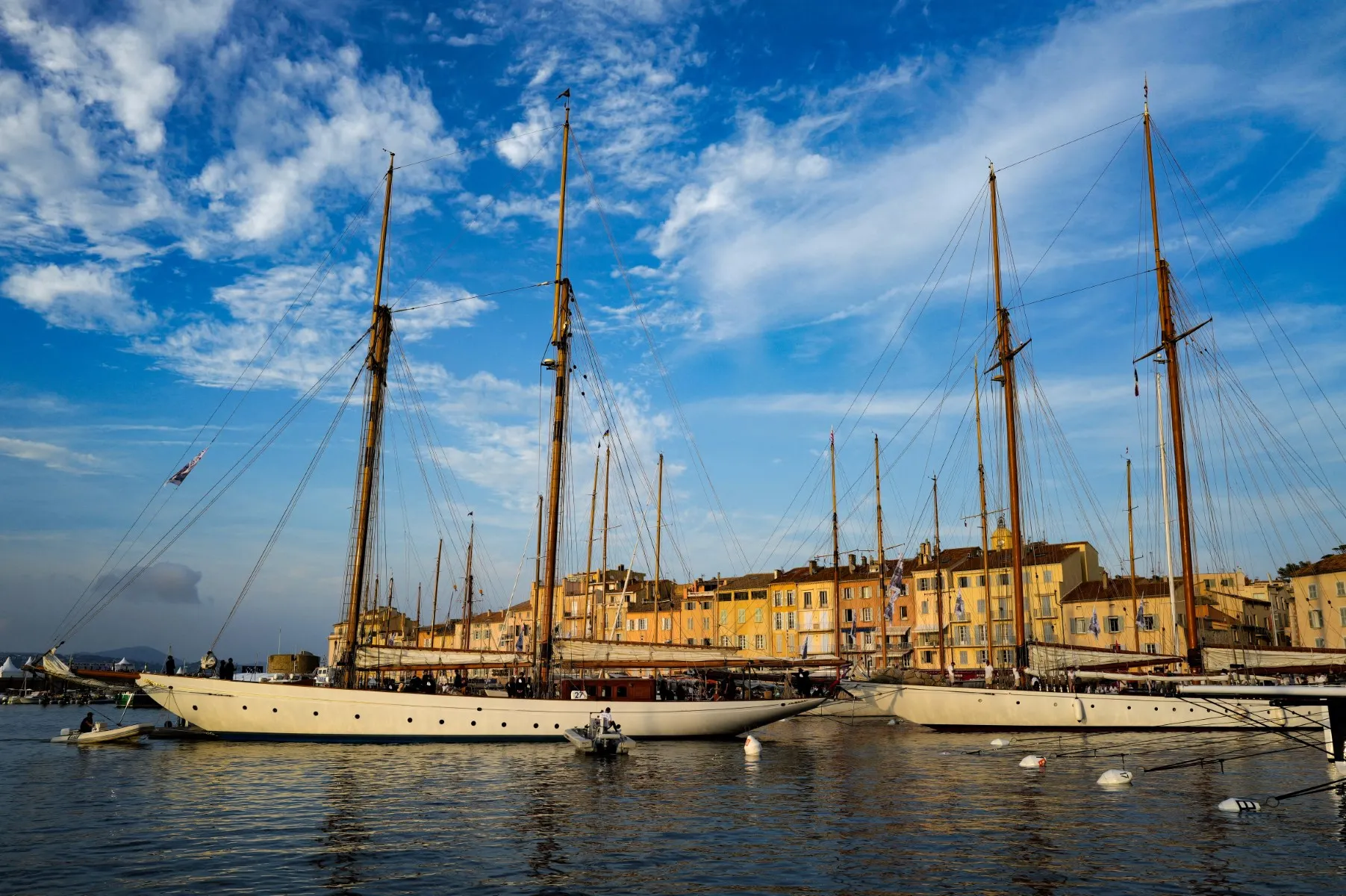
The Emmy-winning creation by Mike Allen, is being shot in Cannes, St. Tropez, and Monaco.

Although some scenes will be filmed in Paris, "the story will remain along the Cote d'Azur," HBO said.

The network also revealed the real-life luxury spot Airelles Château de la Messardière will be transformed into the White Lotus du Cap, while the Hôtel Martinez will serve as the fictional White Lotus Cannes.

Alongside Bonham Carter ("Harry Potter," "The Crown") and British comedian Coogan, the series will also star France's Vincent Cassel ("Black Swan," "Ocean's Twelve") and Heather Graham ("Boogie Nights" and "Austin Powers: The Spy Who Shagged Me.")

Advertisement

Previous seasons of "The White Lotus" were filmed in Hawaii, Italy, and Thailand, and featured stars such as Jennifer Coolidge, Sydney Sweeney, Aubrey Plaza, and Walton Goggins.

The Cannes Film Festival will take place this year from May 12th to May 23rd.

Adblock test (Why?)


Read the whole story
cherjr
4 days ago
reply
48.840867,2.324885
Share this story
Delete

Long delays at French airport after drunk man accidentally opened barrier

1 Share

The accidental opening of a barrier separating domestic and international passengers at a French airport caused chaos and hours of delays at one French airport, local media reported.

Marseille-Provence airport in the south of France saw chaotic scenes and delays to flight departures on Thursday evening after a "containment problem".

Local newspaper La Provence has now revealed the exact nature of the problem - the opening of a barrier designed to separate domestic or Schengen area passengers from non-EU international departures. 

Passengers flying within France, or within the Schengen area, do not have to undergo the same level of passport and immigration checks at those flying to a non-EU destination, and so go through separate departure processes.

Advertisement

However late on Thursday afternoon a barrier between the two sectors of the airport was opened, and dozens of passengers followed the queue to the wrong area.

Airport staff realised the problem at around 6pm on Thursday and were forced to re-do departure checks, causing chaos in the airport and the late departure of several flights.

According to La Provence, it was a 48-year-old man from Marseille, reported to be drunk, who opened the barrier and caused the chaos.

He was arrested and missed his flight to Istanbul, which took off one hour and 15 minutes late, without him.

Around 1,000 passengers were reported to have been affected, with five flights showing as delayed including departures to Corsica and La Réunion.

Local newspaper La Provence used the classic French headline format Ivre, il for their story - Ivre, il ouvre les frontières par erreur et retarde un millier de passagers à l’aéroport Marseille Provence (Drunk, he opened the border by mistake and delayed 1,000 passengers at Marseille-Provence airport)

Adblock test (Why?)


Read the whole story
cherjr
7 days ago
reply
48.840867,2.324885
Share this story
Delete

История дня по итогам голосования за 07 апреля 2026

1 Share
Полдня супруга таскала меня по магазинам в качестве вьючного ослика для покупок. Ввалились домой голодные. На плите сиротливые пять котлет и сочувствующая им картошка. Жена ставит разогревать в СВЧ, деля картошку на равные порции, в каждую тарелку закидывает по две котлеты, а пятую в одно лицо жует холодной. Я обиженно вопрошаю:
- Негоже ж так родного мужа обделять!
Жена присаживается рядом, безмятежно смотрит на меня бездонными глазищами, дожёвывает котлету и отвечает:
- Ты уже большой, я давно должна была тебе это сказать. В общем, ты - приёмный...
Read the whole story
cherjr
11 days ago
reply
48.840867,2.324885
Share this story
Delete
Next Page of Stories